
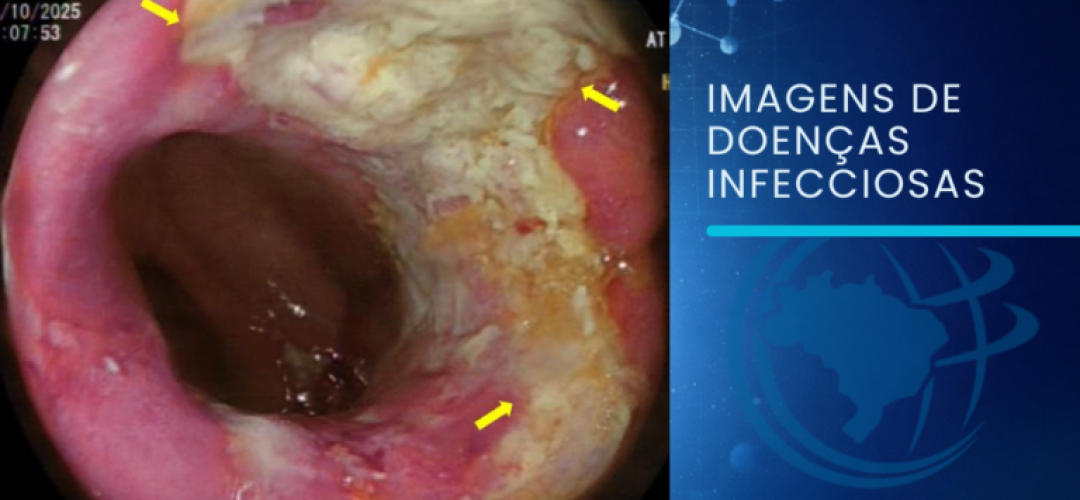
Colonoscopic image showing ulcerated lesions in the ascending colon covered with exudate
Primary tuberculous colitis is a rare extrapulmonary TB manifestation, represents a small part of GI TB cases, with approximately 19% involving the ascending colon
Gündoğdu E- Primary tuberculous colitis.
Elif Gündoğdu[1]
[1]. Eskişehir Osmangazi University, Faculty of Medicine, Department of Radiology, Eskişehir, Turkey.
Corresponding author: Dr. Elif Gündoğdu. E-mail: [email protected]
ORCİD: https://orcid.org/0000-0002-1729-6958
Financial Support: None
Conflict of Interest: The authors declare no conflicts of interest.
Editor: Manoel Otávio da Costa Rocha
Orcid
Elif Gündoğdu: https://orcid.org/0000-0002-1729-6958
A 67-year-old man presented to an outside hospital with abdominal pain, distension, and generalized fatigue. Laboratory evaluation revealed a positive fecal occult blood test, and the patient was referred to our institution with preliminary differential diagnoses of colorectal malignancy and inflammatory bowel disease. On admission, symptoms persisted, and vital signs were within normal limits. Erythrocyte sedimentation rate and C-reactive protein levels were elevated (42 mm/h and 20.6 mg/L, respectively), while other laboratory parameters and tumor markers were within normal limits. Computed tomography (CT) demonstrated diffuse and nodular thickening of the ascending colon wall, with pericolonic fat stranding and regional lymphadenopathy (Figure 1). Chest CT showed no evidence of pulmonary tuberculosis. Colonoscopy revealed five ulcerated lesions in the ascending colon, covered with exudate (Figure 2), along with luminal narrowing. Multiple biopsies were obtained. Histopathologic examination demonstrated severe chronic active colitis with necrotizing granulomatous structures and acid‑fast bacilli. Polymerase chain reaction testing for Mycobacterium tuberculosis was also positive. Based on these findings, a diagnosis of primary tuberculous colitis was established, and standard four‑drug anti‑tuberculosis therapy was initiated. Primary tuberculous colitis is a rare extrapulmonary manifestation of tuberculosis, representing a small proportion of gastrointestinal tuberculosis cases, approximately 19% of which involve the ascending colon.1 It remains a considerable diagnostic challenge because it may mimic inflammatory bowel disease, other infectious processes, and colon carcinoma owing to non-specific radiographic and colonoscopic findings. Therefore, histopathological confirmation is essential for accurate diagnosis.2
Authors’ contribution
EG: Conception and design of the study, Acquisition of data, Analysis and interpretation of data Drafting the article, Final approval of the version to be submitted.
Acknowledgments
The authors of the manuscript have no acknowledgments.
References
- Nagi B, Kochhar R, Bhasin DK, Singh K. Colorectal tuberculosis. Eur Radiol. 2003;13(8):1907-12.
- Chen MT, Ong F, Choy KT, Chakraborty J. Colonic tuberculosis mimicking malignancy: a multidisciplinary medical and surgical approach. BMJ Case Rep. 2025;18(1):e262626.
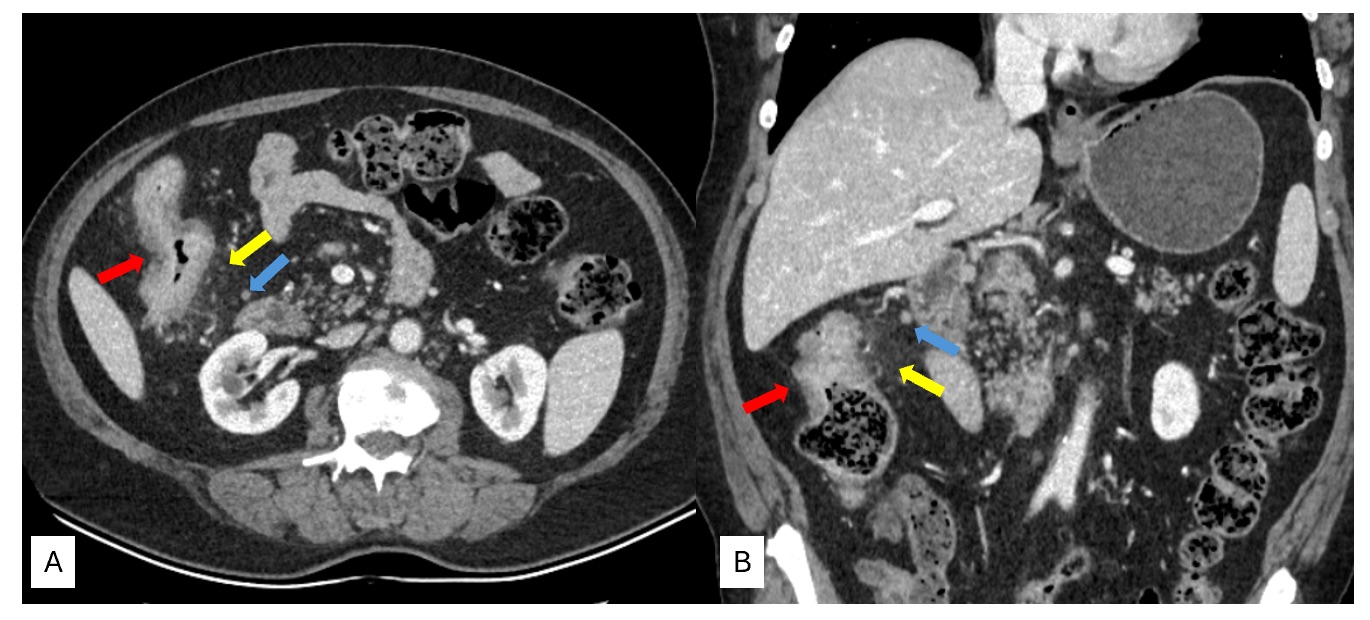
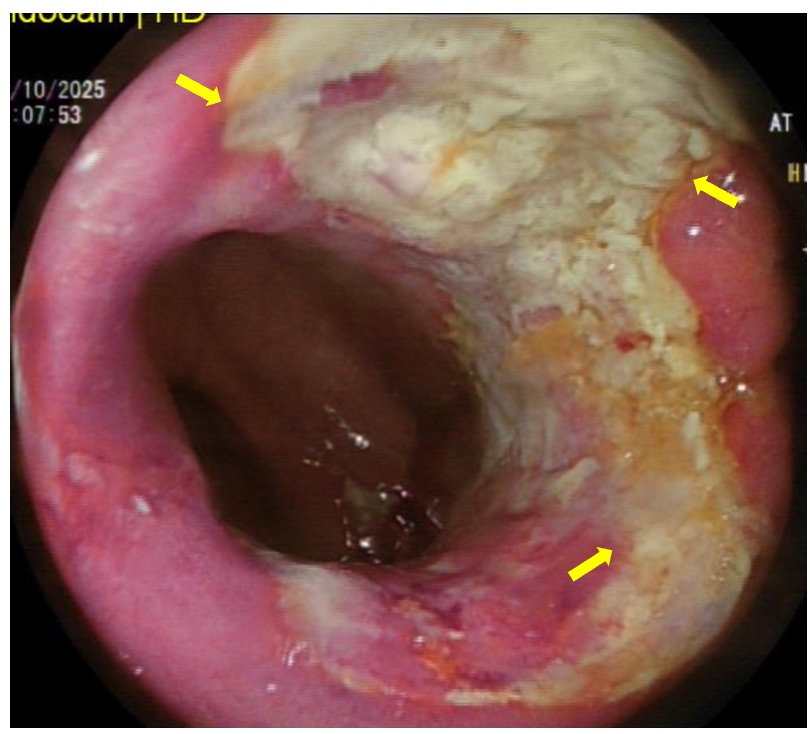
Figure 2. Colonoscopic image showing ulcerated lesions in the ascending colon covered with exudate.
Esta reportagem reflete exclusivamente a opinião do entrevistado.